Event Recap: Community Transportation Association of America Expo 2026, Omaha, NE
By Shared-Use Mobility Center
Jun 24, 2026
Introduction
The Community Transportation Association of America (CTAA) hosted its annual EXPO 2026 conference and Roadeo in Omaha, Nebraska, from May 10 to 13, 2026. The CTAA Expo brings together transit professionals, mobility managers, technology providers, and other national partners to share knowledge and advance community-centered transportation. Some of the key areas of focus include innovative technologies, workforce developments, communication strategies, funding, and regulations. Federal Transit Administration and CTAA leadership presented on critical issues facing communities across the country, and the annual Community Transportation Awards Ceremony recognized outstanding individuals and systems from CTAA member organizations nationwide.
Alvaro Villagran, Director of Federal Programs, and Abby Mader, Program Coordinator, represented the Shared-Use Mobility Center (SUMC) and hosted three workshops.
SUMC-led Workshop Sessions
Workshop 1: Transit Tech Series: Using Mobility-On-Demand to Fill the Last Mile
The first workshop explored one of the most persistent challenges that transit agencies in small urban and rural communities face: how to serve riders who live too far from fixed-route service. On-demand microtransit has gained popularity over the past few years as a potential solution for filling the first- and last-mile gaps connecting to fixed-route bus service and local destinations.
The session drew on SUMC’s technical assistance work with agencies across the country through the Mobility Innovation Collaborative program supported by the Federal Transit Administration (FTA).
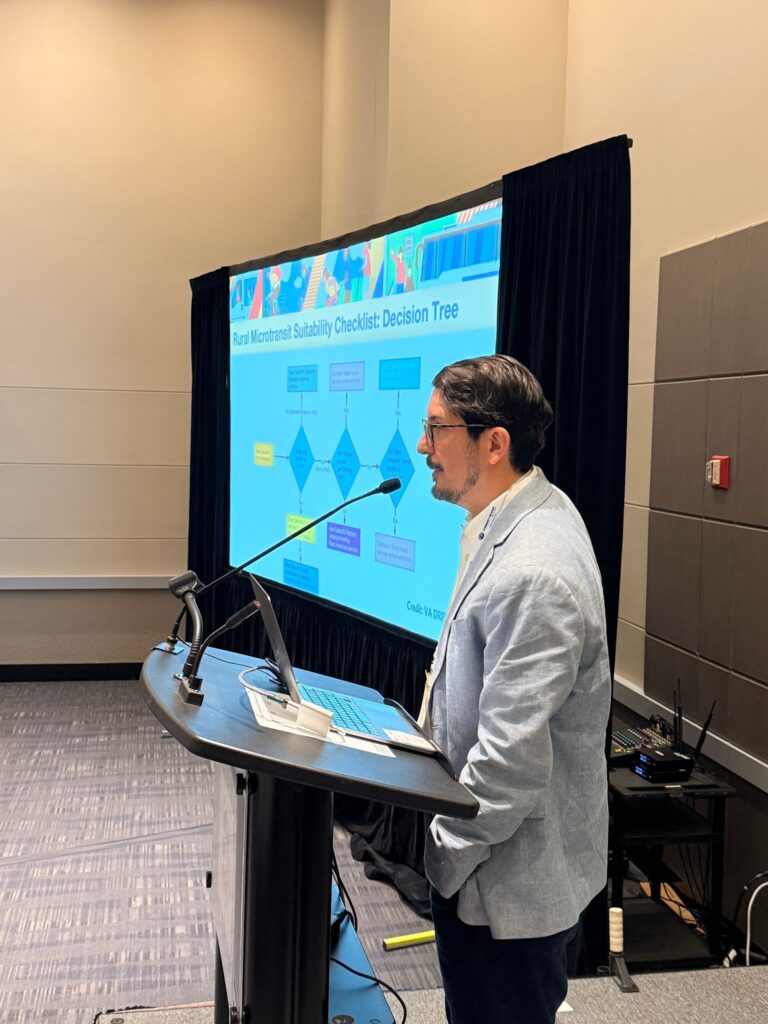
The presentation highlighted several innovative projects that received funding to implement demonstration pilots, including GoWake SmartRide NE in rural North Carolina; DART Connect in Sussex County, Delaware; Cecil Transit’s COMPASS Program in Cecil County, Maryland; and the Lynden Hop in Whatcom County, Washington, as well as shared the Virginia Department of Rail and Public Transportation’s decision tree tool for rural microtransit to help agencies identify which microtransit use case best fits their community context and needs.
In addition, this session highlighted findings from SUMC’s First and Last Mile Connectivity for Missourians report, a study developed in partnership with Via for the Missouri Department of Transportation. Together, these projects and tools represented a range of approaches to first and last-mile connectivity across agencies of different sizes and scales.
Workshop 2: Innovation Implementation: Where to Start
Transit agencies across the country are pursuing innovative mobility solutions for time, resource, and funding efficiency. When any of these are compromised, the hardest part when starting a project can be knowing where to start.
To address these questions, SUMC developed a Guidebook for Mobility Innovation. The Guidebook itself was developed through a research process that combined surveys, workshops, and interviews with mobility innovators across the public and private sectors. The result is a set of nine principles that are organized around community engagement, partnerships, data, and resource management, each followed by a real-world example, strategies, and discussion prompts.
This workshop leveraged a few principles from the Guidebook as a foundation for discussion, inviting participants to apply the principles’ questionnaires to their current work and to consider innovative approaches to the problems they are tackling. During the session, participants examined a few principles in the context of their own transit agency. The discussions covered reflecting on whether technology is truly required to solve a given problem, the importance of building the right internal team before a pilot launches, and how to structure partnerships so they remain functional as a project evolves.
Workshop 3: Strollers, Snacks, and Seamless Transfers: Designing Mobility Hubs for Young Families
This session builds on SUMC’s existing mobility hub research, including Mobility Hubs: Where People Go to Move, the Carsharing and Mobility Hubs in Affordable Housing report, and theMobility Hubs for Women and Caregivers Framework, applying those lessons specifically to young families in small urban and rural communities. The session examined how daily travel for families with young children differs from a typical commute, involving school drop-offs, childcare pickups, grocery runs, and medical appointments — often chained together into a single trip. It offered a reframe, centering family travel needs as a lens for evaluating service design and the built environment. When planned through this lens, mobility hubs can make families’ daily travel more manageable, supporting transit as a safe, comfortable, and convenient option for families who might otherwise depend on a car.
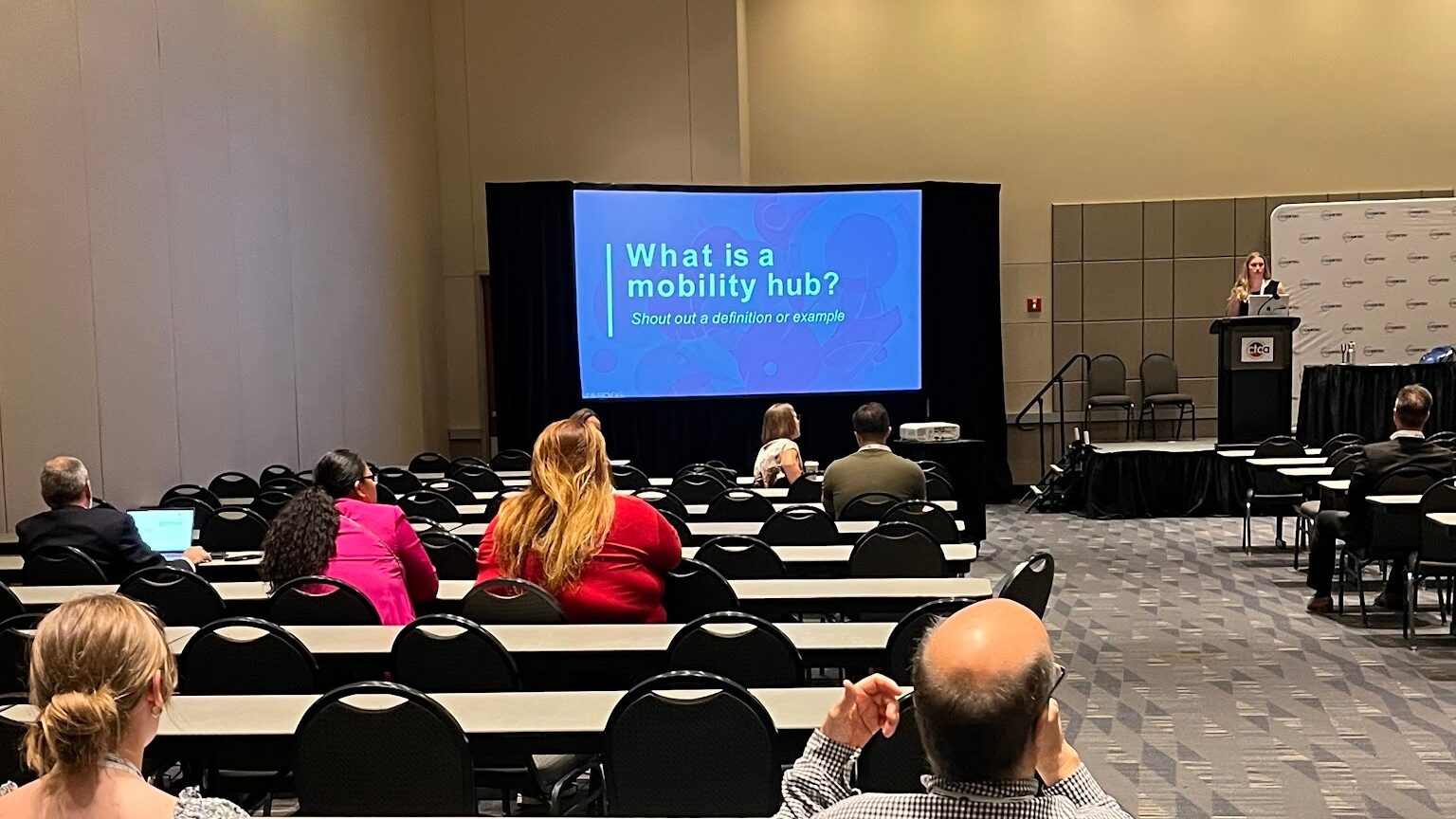
This session covered two content areas:
- Location Strategy: siting mobility hubs near or at frequently visited destinations, including grocery stores, healthcare facilities, childcare centers, schools, and transit connections
- Physical Features: the design elements that make a hub accessible and welcoming for families: stroller and wheelchair accessibility, well-lit drop-off and pick-up zones, family restrooms, real-time service information displays, shade, seating, and play elements
From there, participants moved into two hands-on activities. The first activity asked participants to develop a family persona rooted in their own community, considering the persona’s daily travel patterns, needs, and the barriers they may encounter when using public transportation. The second activity asked participants to imagine a mobility hub designed to serve the family’s persona, identifying potential locations and features that would make using public transportation a safe, comfortable, and convenient option for families.
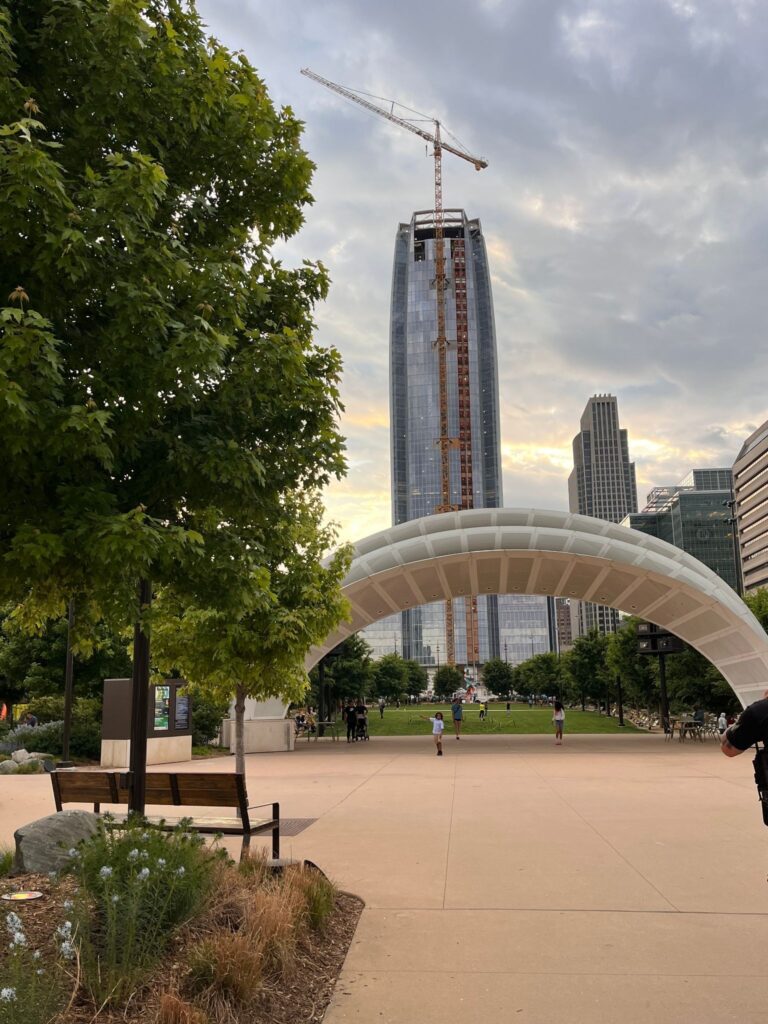
Highlights from Other Sessions
Determining Your Technology Resilience and Planning to Improve It
Kevin Chambers, Principal and Consultant at Full Path Technology, led a session in the Transit Tech Series. The session focused on a gap many agencies face: investing time and resources in new technology systems without a plan for when those systems fail. Using the National Center for Applied Transportation Technology (NCATT)’s Technology Readiness and Resilience Assessment, a tool developed through the CTAA Transit Tech program, Kevin walked participants through a structured process to evaluate how prepared their agency is to handle technology disruptions and whether the technology they have adopted is the right fit for their organizational context. The assessment is especially useful for smaller agencies that might not have dedicated IT staff to support the adoption of new technology while navigating a changing technology marketplace. Rather than framing technology resilience as a technical problem, the session positioned it as a planning and leadership question, one that affects service continuity, rider trust, and operational suitability.
Engaging with Empathy: Building (and Sometimes, Re-building) Bridges with your Community
Jaime McKay, Deputy Director, and Roman Steichen, Director of Transit Services, of Frederick County, Maryland, led a session on trust, relationships, and partnerships between transit agencies and community organizations. Agencies recognize the importance of relationships and working outside of siloes, but sustaining that practice over time can be difficult. This session drew on experience at Frederick County’s Transit Service Division, and building partnerships has become an agency priority. Jaime and Roman shared strategies for generating stakeholder buy-in, engaging with constituencies that have historically been resistant or skeptical, and building relationships between internal staff and external community and partners. They also spoke to the value of consistent, transactional outreach: keeping people informed of what you are doing builds credibility over time, and that credibility shapes whether a program earns durable community support.
DC Legislative Update: IIJA Reauthorization Prospects and More
Scott Bogren, CTAA’s Executive Director, shared a legislative funding update on the Infrastructure Investment and Jobs Act (IIJA) as it approaches the end of its authorization period. Its reauthorization is crucial for the transportation sector as a whole, as many agencies have recently relied on these funds to implement new projects and programs. Scott gave a candid read of where things stand on IIJA in Washington. The session also covered surface transportation reauthorization prospects, rural health transformation initiatives, and regulatory reform, with time for Q&A. For transit agencies whose funding, planning, and federal program eligibility rely on decisions being made in Washington, the briefing was a useful grounding in what to watch, how to engage, and how to prepare for future funding.
CCAM TAC Series: Innovative Concept to Community Impact
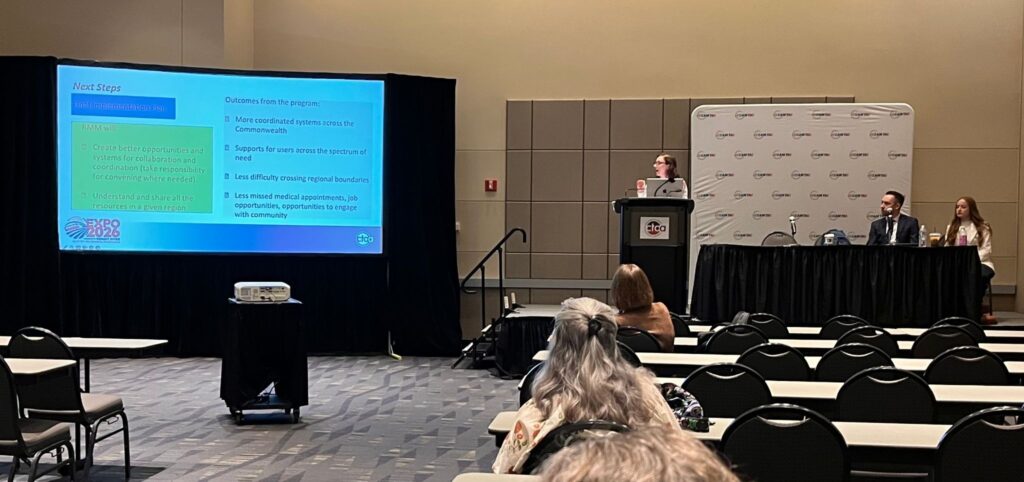
Maria Foster, Statewide Mobility Lead at MassDOT, Alex Guerrero, Director of Regional Initiatives at Texas Association of Regional Councils, and Suzanne Alewine, Association Executive Director at Missouri Rural Health, presented on three programs that began by assessing the community’s needs and used FTA’s Innovative Coordinated Access and Mobility (ICAM) grant program to build a practical response. The session highlighted three approaches: statewide mobility management, transportation vouchers, and volunteer driver programs:
- Amarillo Ride-Share Voucher Pilot Program, a partnership between the City of Amarillo, TX, Amarillo City Transit, and the Panhandle Regional Planning Commission, launched in February 2026. The program provides curb-to-curb transportation for older adults, people with disabilities, and agency-referred clients at $1 per trip, with children riding free. A FTA’s FY21 ICAM grant provided the initial funding for the project. The current mayor of Amarillo has made expanding access to mothers with young children a priority, working to integrate Region 16 Head Start participants into the program as a referred client population, making them eligible for the $1 fare with children riding free.
- HealthTran in rural Missouri, a volunteer river program administered by the Missouri Rural Health Association, was built to connect residents in rural communities to healthcare and other essential services. This program has been sustained by three separate ICAM grants: ICAM 2019, CCAM 2022, and ICAM 2022. The program was grounded in – and in response to – a community needs assessment that brought light to the critical conditions in rural communities, such as:
- identifying gaps in transportation as a barrier to accessing health care;
- noting that most insurers don’t cover the cost of transportation to medical services (with the exception of Medicaid);
- emphasizing that 21 hospitals in Missouri have closed since 2014;
- reporting an overreliance on hospital emergency rooms for non-emergency care needs; and
- acknowledging that public transit service is seriously underfunded in Missouri.
- The Massachusetts Department of Transportation has developed a statewide mobility management program with agencies that lead and manage aging and disability programs. The program aims to improve accessibility, efficiency, and availability of transportation services for residents, with a focus on older adults, people with disabilities, and people of low income. Through coordination and shared resources, the program is enabling a more coordinated transportation systems operating across regional boundaries within the Commonwealth.
Exploring Omaha, Nebraska
A City in Motion: Building Omaha’s Streetcar
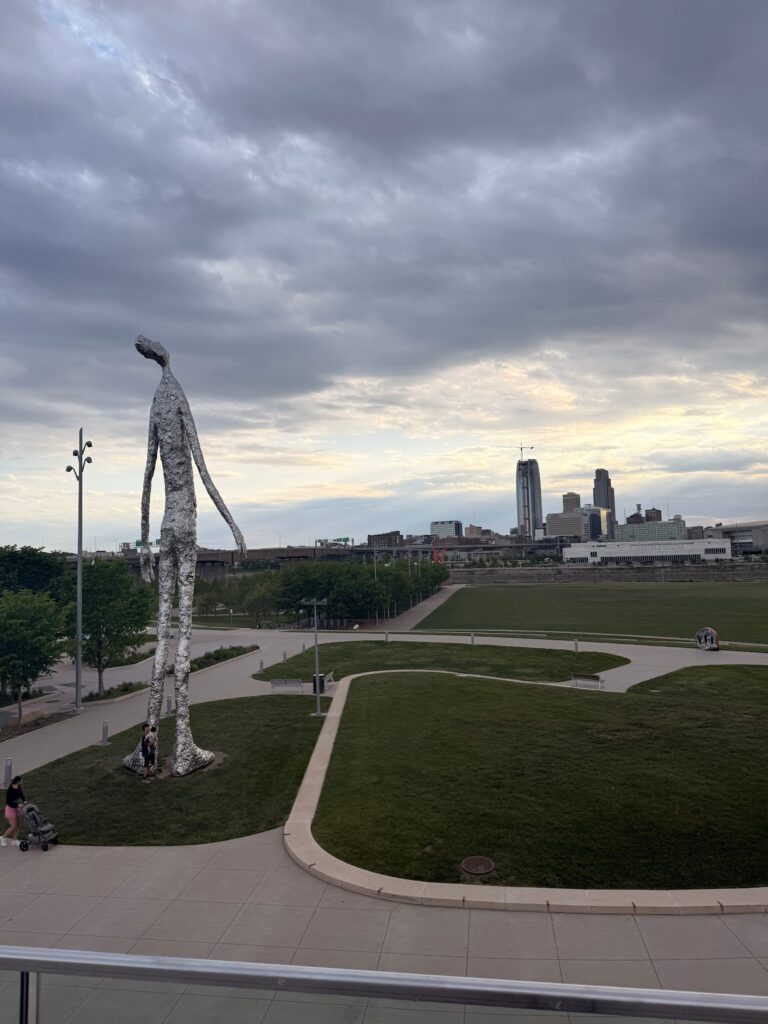
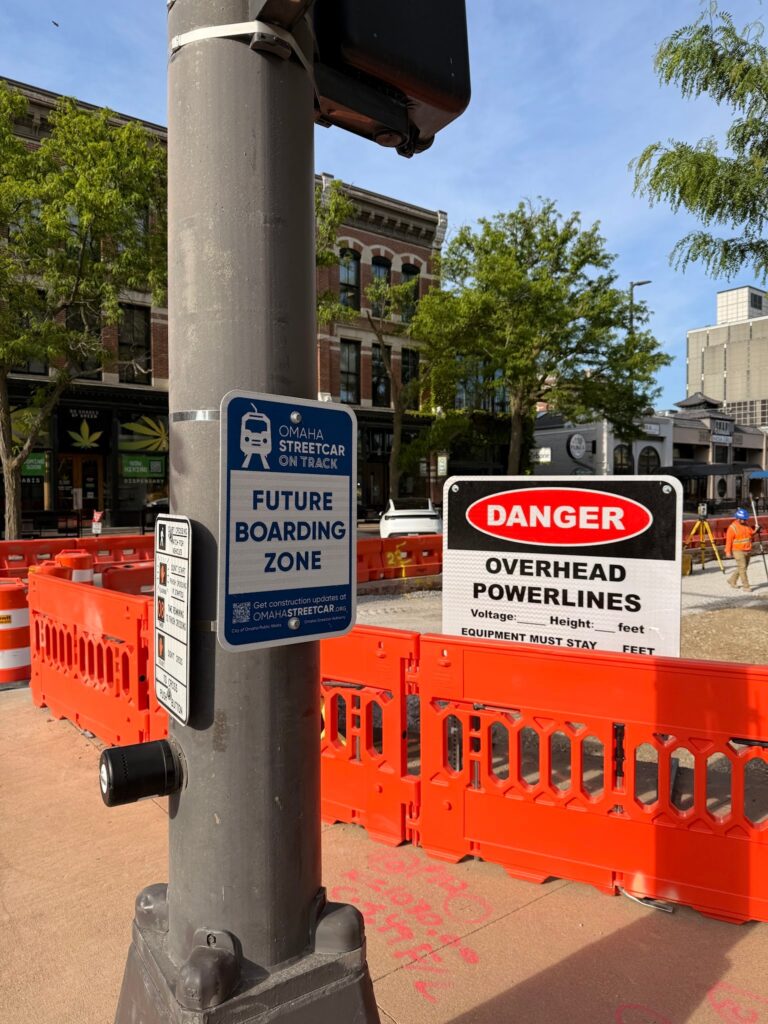
Construction activity is hard to miss when in Downtown Omaha. The $421 million Omaha Streetcar is designed to carry passengers 3.2 miles from midtown to downtown. The goal of this project is to draw new development, jobs, and housing to the city’s core. This project is also tied to regional affordable housing goals. Mayor John Ewing Jr. announced a strategy to create 2,000 affordable housing units using funds from streetcar district financing. When complete, the streetcar is expected to spur more than $3 billion in new development. Mainline track construction is underway, with streetcar service expected to begin in 2028. The streetcar will be free to all passengers.
Active Transportation Initiatives
Omaha offers many ways to move. The Bob Kerrey Pedestrian (known as “Bob” to the locals) is a 3,000-foot pedestrian bridge spanning the Missouri River and connecting Omaha, Nebraska, to Council Bluffs, Iowa. This bridge is named after Senator Bob Keerey, who secured over $18 million in federal funding for its construction, an astounding 80% of the total cost. A recent companion structure, “Baby Bob” opened in April 2025 to improve pedestrian connectivity from “Bob” to the riverfront. During the CTAA Expo, both bridges saw steady recreational use.
Omaha’s trail network extends beyond the riverfront as well. The North Omaha Trail is a community-led trail project developed by Spark CDI, a non-profit community development organization. The goal of this organization is to reconnect North Omaha to the city via a trail. Phase 1 of the trail opened in October 2022, and in 2024, Phase 2 was awarded $ 8 million to extend the trail through downtown Omaha and the riverfront. Phase 2 funding was awarded by the Nebraska Department of Economic Development and is expected to conclude in 2027. Heartland Bike Share stations are planned as part of the trail’s build-out, further connecting to Omaha’s transportation network.

Heartland Bike Share offers another mode to explore the riverfront and the surrounding trail network. Operated by the non-profit ROAM Share, the bikeshare system offers a network of over 80 stations and 400 ebikes across 125 square miles of Omaha, Papillion, and Bellevue on the Nebraska side, and Council Bluffs on the Iowa side. There are docking stations at both ends of the Bob and Baby Bob Bridges. In April 2026, Heartland Bike Share announced that all residents over 16 within its service area would receive unlimited 60-minute rides at no cost, with no surcharge for ebikes. Residents can apply online for free. The program is funded through sponsorships, with no cost to taxpayers, and is currently authorized as a one-year pilot. Prior to going fare-free, the system was only recovering 10 to 15 percent of its operating costs through rider fares, more than half of which came from out-of-town visitors rather than residents. Mayor John Ewing framed the program as a response to transportation gaps, noting its potential as a last-mile connection for riders getting on or off the bus. The bikeshare system is also integrated with Omaha’s transit network, with 14 stations along the Omaha Rapid Bus Transit (ORBT) route, an eight-mile east-west corridor that connects downtown Omaha to Westroads Mall.
Conclusion
The sessions at CTAA Expo 2026 showed that the transportation industry is balancing new technologies, service models, and partnerships. Agencies of different sizes and scales are testing approaches, with some advancing demonstrations and others moving to permanent programs. As Kevin Chambers noted in his session on technology resilience, building trust in new tools remains a foundational piece in any project.
SUMC is contributing to conversations in shared mobility across community contexts and the mobility needs of families using transit. The three SUMC-led workshops served as a starting point for discussions on innovative modes of transit, and brought together practitioners to discuss how transportation systems can be designed with families in mind.
CTAA announced that the 2027 Expo will be held in Atlantic City, New Jersey, kicking off with the annual Roadeo on June 7, 2027.