Event Recap: 2025 Transportation Summit: Exploring AI in Shared Mobility, hosted by Move Minneapolis and the Minnesota Shared Mobility Collaborative
By Shared-Use Mobility Center
Nov 24, 2025
Introduction
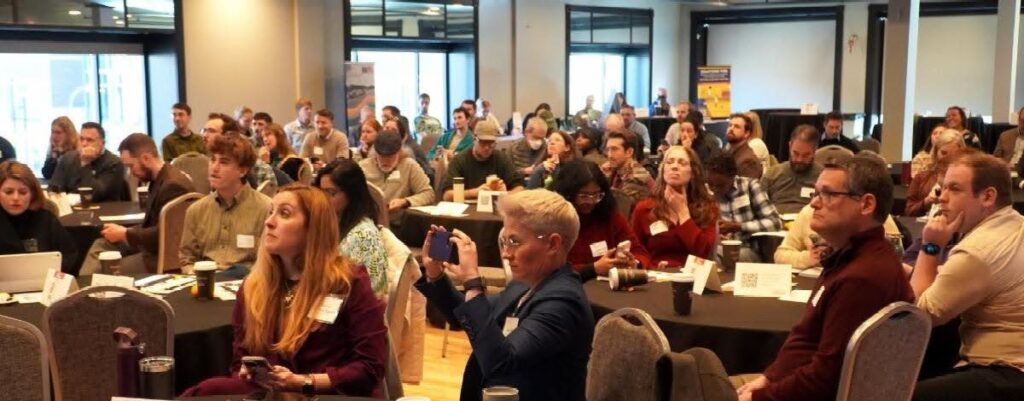
On November 12, 2025, over 50 Minnesota-based transportation professionals from local transit agencies, the Minnesota Department of Transportation, the University of Minnesota, consulting firms, and advocacy organizations gathered for a half-day conference in Minneapolis, Minnesota, to explore the transformative role that Artificial Intelligence (AI) can play in public transportation. This event was co-hosted by Move Minneapolis, a nonprofit organization dedicated to fostering sustainable transportation options, and The Minnesota Shared Mobility Collaborative, a coalition of public, private, and nonprofit transportation leaders that work together to improve the mobility landscape in the Twin Cities.
Panelists, which included representatives from the public, private, and nonprofit sectors, discussed their experiences in advancing mobility through AI and Autonomous Vehicle (AV) deployments. The Shared-Use Mobility Center (SUMC) was represented by Program Coordinator Abby Mader, who attended to learn more about recent trends, challenges, and advancements in AI and AV technologies.
A few key takeaways from the summit
The 2025 Transportation Summit focused on how AI and AV technologies can advance shared mobility options for all road users through safety and accessibility-focused automations and practices. During the keynote speech, Tara Olds (Director of the Connected and Automated Vehicles (CAV) Program at the Minnesota Department of Transportation) discussed regulations regarding AV and AI technology, and how thoughtful policies can create safer and more efficient roads for everyone.
The keynote speech was followed by a panel to discuss what unique approaches their organizations are taking to allow users to access public transportation options in their regions. Panelists included:
- Tammy Meehan Russell (Founder, President & Chief Catalyst at The PLUM Catalyst): The PLUM Catalyst works with agencies across the nation, with a specific focus on improving mobility for everyone. Tammy spoke to one project specifically, goMARTI, based in Grand Rapids, MN.
- Nick Martini (Senior Vice President of American Student Transportation and Northstar Bus Lines): Northstar operates school bus services in the Twin Cities and surrounding suburbs. Nick spoke about what AI-focused safety measures Northstar is taking to ensure driver alertness.
- Erik Hansen (CEO of SouthWest Transit): Erik spoke for SouthWest Transit, a transit provider based in the Southwest suburbs of the Twin Cities, and focused on how AV technology is improving SouthWest Transit’s mobility landscape. In early 2025, SouthWest Transit launched a pilot program to incorporate AVs into its microtransit service.
Safety Forward Features
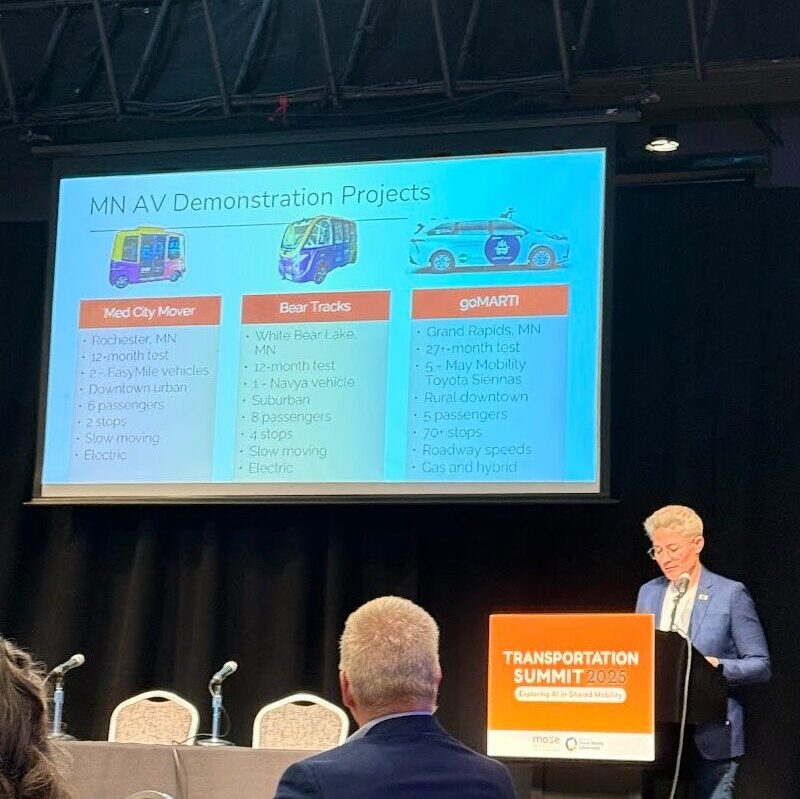
As traffic, road, vehicle, and operations data continue to be easier to collect, access, and analyze, transit planners and operators are exploring how AI technology can help navigate and analyze this data. Speakers and panelists highlighted how AI has changed how buses and microtransit vehicles operate, especially when working in tandem with human insight and reaction times.
Nick Martini detailed the implementation of dashboard cameras and software systems that analyze data and facial recognition using AI, which detects facial expressions like drowsiness and distractedness, but can also determine cellphone use or not wearing a seatbelt. This AI-enabled tool is not used for surveillance purposes, but rather to function as a real-time safety coach for operators, as the system automatically detects unsafe driving behavior and flags the video evidence. This feedback is then sent directly to the training department, which uses the video for targeted post-shift coaching. Martini framed this as a vital tool for risk reduction, acknowledging that human error is inevitable, but AI can provide an essential layer of safety and continuous improvement for drivers and students.
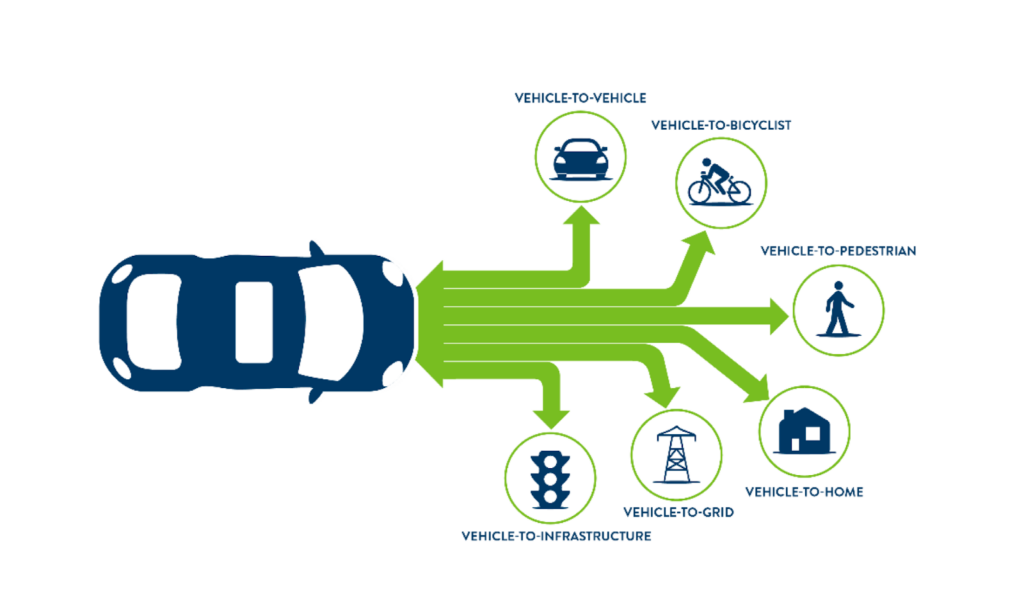
Additionally, while AVs are already deployed in many areas across the US (as both pilot projects and permanent deployments), most states, including Minnesota, require a human operator to be present when a vehicle is in operation. Agencies and operators present at the Transportation Summit noted that AI and AV technologies still have a way to go in terms of how systems communicate with each other to provide the safest trips possible. Keynote speaker Tara Olds noted that communication systems between AVs and traffic infrastructure, known as V2X (Vehicle-to-Infrastructure), will be pivotal in adopting fully automated systems in the future. This communication between vehicles and infrastructure could eventually supply an extra layer of security to keep both drivers, passengers, and pedestrians safe. For instance, if a distracted driver misses a red light, V2X technology could force the car to stop and ultimately protect the driver, their passengers, surrounding pedestrians, and to protect costly infrastructure from potential damage.
In addition, panelists also discussed the variety of approaches for adopting AI technology to increase safety for nearby pedestrians. Southwest Transit and the PLUM Catalyst are investing in safety through autonomy; SouthWest Transit has already adopted the technology to provide AV service, while the PLUM Catalyst is working with transit agencies to ensure the success of newly adopted AV projects. Both organizations noted that pedestrians and drivers view each other as unpredictable, and AVs can help to alleviate this uncertainty among both groups. By using 360-degree cameras, AVs can better navigate intersections and detect barriers that a human driver may not be able to see. Thus, having two different sets of safety measures (human monitoring and AI reaction) can make streets safer for everyone. One panelist highlighted the 476 road deaths in Minnesota in 2024; coupled with the argument that the majority of traffic fatalities are due to human error, this statistic encouraged participants to consider how many fatalities would be cut if every vehicle on the road had the additional layer of safety through AI working in their favor.
Expanding Access to Public Transportation
Accessibility was at the forefront of all speakers’ discussions, noting that AI and AV technologies can effectively activate mobility for both new and returning passengers. Erik Hansen of Southwest Transit noted that on-board passenger counters and route optimization powered by AI make scheduling more efficient, helping vehicles reach a larger number of passengers on a given day based on historical data. Similarly, route optimization can also make the overall system more reliable for all users by reducing downtime and service disruptions. The ability of AI to constantly analyze performance and predict maintenance needs before a failure occurs ensures that more vehicles are available and operating on schedule, helping build passenger confidence through reliability and consistency.
Tammy Meehan Russell of the PLUM Catalyst noted that AI can be used to maximize route and vehicle efficiency before service even begins, or before vehicles are deployed. By evaluating land use and traffic patterns, AI-enabled and forward-looking land analysis allows agencies to go beyond simple historical ridership data by factoring in elements like the proximity of residential areas, employment centers, or commercial districts. By understanding the underlying geography of demand, AI can proactively structure service models, informing decisions on where to place microtransit hubs or how to best design flexible routes. This strategic pre-service deployment ensures that vehicles are positioned to match expected passenger density and flow, maximizing their effectiveness and providing the necessary infrastructure to support operations before service even begins.
Conclusion
The 2025 Transportation Summit exploring AI in public transit helped build a collective understanding that the adoption of AI technologies is no longer a prospect, but a present-day reality being navigated by agencies across the United States. The discussions moved beyond the theoretical capabilities of AI technologies to focus squarely on the ethical and practical uses ahead. The central message of the Transportation Summit was that adopting AI is a balanced process. While AI advancements are successfully activating mobility for new and returning passengers through systems like route optimization, proactive maintenance, and demand forecasting, this progress is rigorously checked by two core ethical mandates: safety and accessibility.