Event Recap: Transit Retreat 2026, Mobile, AL
By Shared-Use Mobility Center
Apr 7, 2026
Introduction
Since 2022, the Northwest Pennsylvania Mobility Alliance has hosted an annual Transit Retreat for transit agencies and mobility providers to convene in an intimate setting to facilitate and promote the connections to improve transportation networks across the country. This Retreat focuses on peer-to-peer connections for mobility providers specifically from small urban and rural areas, recognizing the unique challenges that these communities face. The 2026 Transit Retreat took place in Mobile, Alabama on March 4 and 5, and brought together 150 attendees from transit agencies, mobility management organizations, private mobility and technology providers, non-profit organizations, and technical assistance centers from 23 different states to engage, share experiences, and collaborate. Representatives from several Integrated Mobility Innovation (IMI) and Accelerating Innovative Mobility (AIM) awardee organizations participated in the event and presented lessons learned from their demonstration projects.
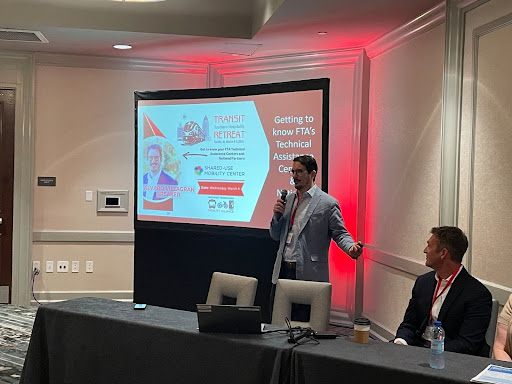
Alvaro Villagran, Director of Federal Programs, and Hani Shamat, Program Manager, represented the Shared-Use Mobility Center (SUMC) at the Retreat, and showcased SUMC’s work promoting mobility innovation in three separate sessions:
Introduction to FTA Technical Assistance Centers and Other National Partners
First, SUMC participated in a session with several partner organizations, including FTA’s Technical Assistance Centers National Rural Technical Assistance Program (RTAP), and the Transit Workforce Center, as well as other national organizations such as North American Bikeshare and Scootershare Association (NABSA), Association of Mobility Managers, Introducing Youth to American Infrastructure, and CALSTART, to showcase how these organizations support mobility projects across the country. The panel presented an opportunity for SUMC to highlight the decade-long partnership with FTA advancing mobility innovation programs through the Mobility Innovation Collaborative and to showcase SUMC’s tools and knowledge sharing resources.
An Interactive Workshop on Mobility Innovation in Small Communities
SUMC hosted an interactive workshop exploring some of the challenges, knowledge gaps, and wishes that rural and small urban mobility providers have for their services. The workshop mirrored the activity from SUMC’s Second MIC Workshop in Chicago in May 2023. With NABSA’s support as a co-facilitator, SUMC distributed among participants one of three cards at random: WISH, CHALLENGE, and LEARN. Each card had a prompt that aimed to tap into key practitioner insights in pursuing innovative mobility projects.
After filling out their cards, each participant paired with a partner to share and discuss what they wrote. After a few minutes, attendees exchanged cards with their partners and moved into small group discussions based on their new cards, where they relayed their partners’ thoughts to drive the discussion.
Some of the major insights and themes from the cards and conversations were:
CHALLENGE
Challenge cards aimed to address the key barriers to mobility innovation, and responses addressed several major structural hurdles. Common themes included:
- Limited and competitive funding sources. More programs at the federal or state level that could offer funding pathways, grants for project implementation, or stable financing models would help providers implement projects.
- Staff capacity and expertise. Even when opportunities exist, some teams may lack the time or expertise to fully pursue them. This suggests the importance of technical assistance and knowledge sharing initiatives in moving mobility initiatives forward.
- Difficulties coordinating and aligning with partners and stakeholders. As innovative projects often require coordination between various stakeholders, misaligned priorities or unclear roles can severely impact project progress. Some respondents suggested that emphasizing formal partnership frameworks and shared governance models may help.
- Procurement and institutional barriers. Traditional procurement systems are not always well suited for certain types of partnerships, particularly with regards to emerging technologies. Often agencies’ internal rules or slow contracting processes may create barriers as well, and flexible institutional processes may help facilitate testing new technologies and service models.
- Challenges with reliable data collection and evaluation. Some responses noted that some agencies struggle to collect reliable data, making it difficult to evaluate outcomes from pilot projects and share knowledge across partners. Without good data and a robust evaluation, it becomes difficult to justify scaling projects or launching similar initiatives.
Overall, these insights suggest that the biggest barriers to mobility innovation in rural and small urban settings may be wider institutional and resource constraints, rather than technology itself.
LEARN
Participants with Learn cards were invited to share takeaways they gained from working on their own mobility initiatives that influenced how they approach subsequent projects. Some of the most impactful lessons learned and important factors leading to successful initiatives included:
- Structured partnerships. Collaboration between transit agencies and private operators is necessary to advance innovative initiatives. However, these partnerships require clear roles, expectations, and shared goals.
- Robust community engagement. Projects are much more successful with thoughtful and engagement processes. Stakeholders should be involved early in the project, and continuously throughout the project’s duration.
- Reliable data and evaluation. Collecting and analyzing data early on the project can help implementers identify areas to improve operations and demonstrate the community impacts of the service.
- Funding sustainability. Several responses emphasized the importance for funding strategies that prioritize the post-pilot phase and long-term sustainability, noting that the best outcomes come when these strategies are employed early in the process.
These responses show that for many practitioners, mobility innovation is not simply about technology, but about systems, internal processes, and relationships.
WISH
Wish cards prompted participants to consider resources that may not yet exist that would be helpful to have in pursuing innovative mobility projects. Respondents noted various wishes, including:
- Implementation support. Technical assistance initiatives, resources for procurement guidance, and grant support can help agencies turn innovative ideas into real projects.
- Collaboration. Practitioners could benefit from sets of tools and strategies to help build and sustain partnerships and engage stakeholders.
- Knowledge, capacity building, and workforce development. Some responses noted training, workforce development, and data analysis tools to strengthen internal capabilities.
Capacity building emerged as a major theme, and practitioners noted the desire for robust support systems to help implement innovative mobility projects.
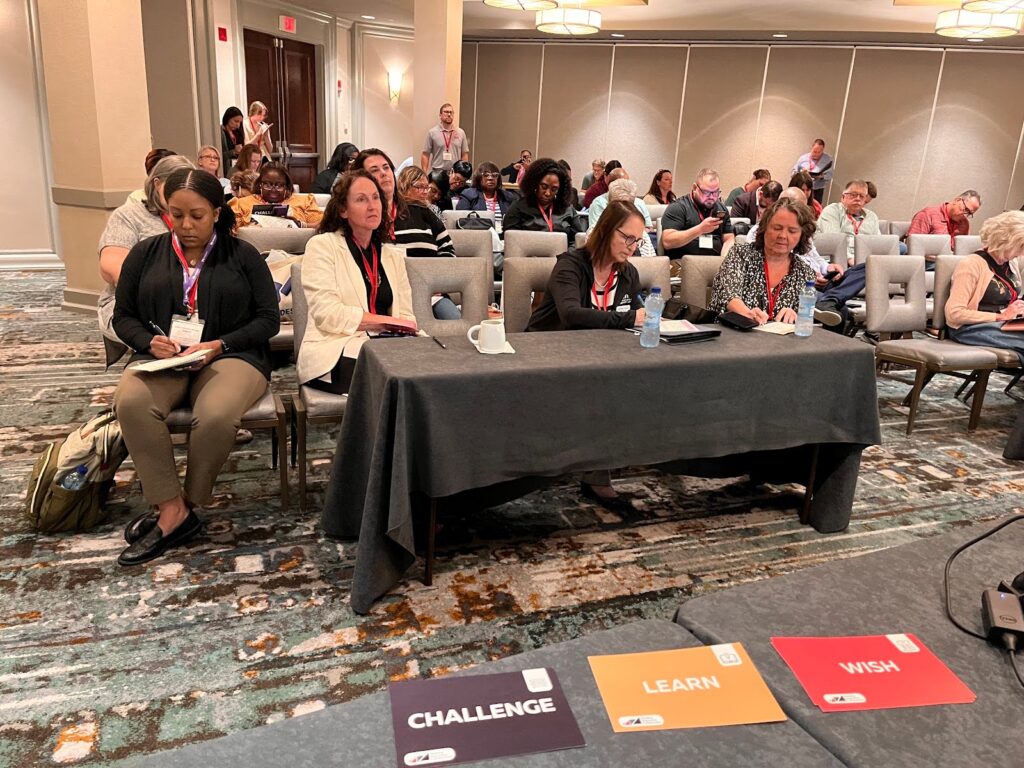
At the end of the workshop, participants were encouraged to fill out an additional card, DREAM, to share what projects or initiatives they would pursue given unlimited resources. These Dream cards showed a clear vision for transportation to be welcoming, exciting, and inspiring.
Panel on Mobility Innovations and Funding for Human Services Transportation
SUMC led a panel on innovative funding strategies and transitioning projects from pilot to permanent along with two IMI awardees, Suzanne Kalmbacher from Cecil Transit and Ann Simpson from Baldwin Regional Area Transit Service (BRATS).
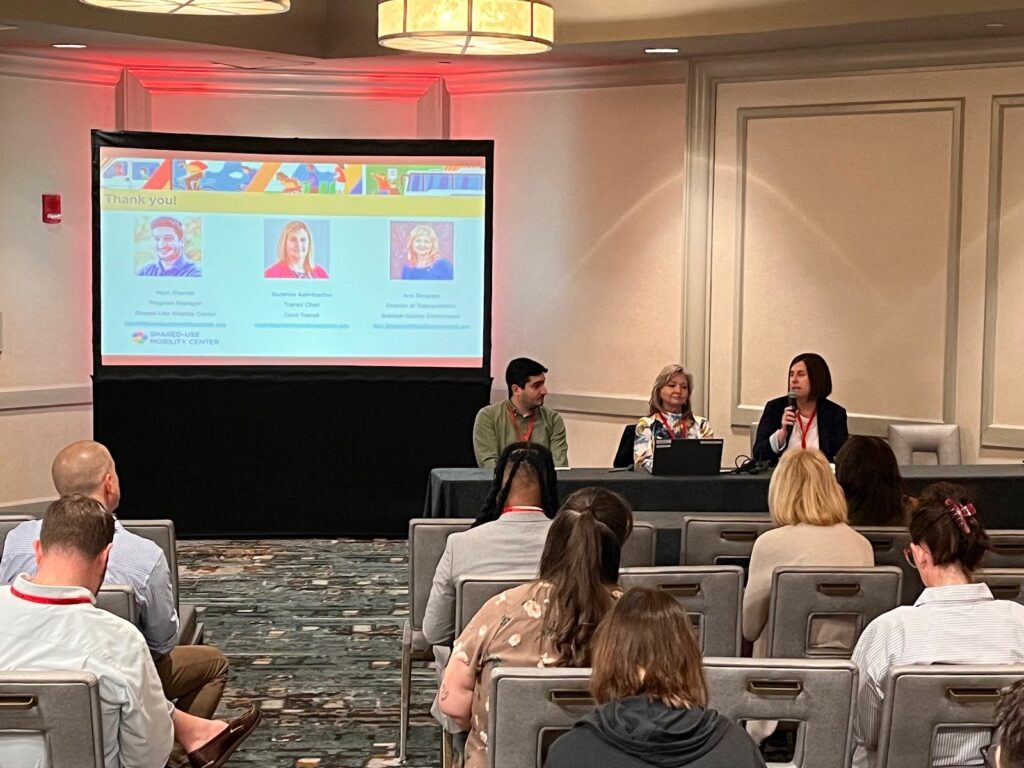
After a brief presentation about the Mobility Innovation Collaborative and icebreaker trivia to highlight a few of the projects, Suzanne Kalmbacher presented on the Cecil On-demand Mobility Platform and Service Solution (COMPASS), a targeted microtransit service designed to serve Cecil county residents recovering from drug abuse and addiction, emphasizing how the service tapped into unconventional funding sources like state substance abuse prevention grants, to continue past its demonstration period. Suzanne highlighted some of the community impacts of COMPASS, including its integral role in addressing transportation barriers to employment; since its launch, COMPASS users have seen a 65% reduction in time taken to gain employment.
Afterwards, Ann Simpson discussed the challenges of providing demand response transit to largely rural, 1,600 square mile Baldwin County, and how FTA’s IMI program helped BRATS transition into a fully county-wide microtransit service. After its demonstration period, BRATS transitioned into a permanent service, and Ann showcased how impactful and transformative the service has become through operational and ridership data. Among other impacts, Ann shared that over half of all BRATS trips are for employment or education, and over 13% of trips are for medical appointments.
Takeaways from other Retreat sessions
Coordination is Key for Effective Community-Focused Mobility Projects
With a focus on transportation in rural and small urban areas, the Transit Retreat highlighted the value of partner coordination in community-oriented transportation projects. Rural communities face unique transportation challenges, with decentralized destinations, low population densities, and long travel distances. Addressing these challenges requires strong collaboration between service providers, mobility managers, and community partners. Several sessions highlighted the importance of this coordination, including the session A Conversation about Addressing Food Insecurity with Mobility Projects, which discussed community-centered coordination efforts in Oklahoma and Northern Minnesota to connect people to necessary destinations and resources, Building Partnerships through MOUs, which covered how formal agreements between transportation providers and Tribal communities can foster collaborative planning and improve transportation access, and Mobility as Support: Strengthening Transit through Coordination, which presented strategies to foster trust-building, partnership development, and growing stakeholder confidence. Among the cases mentioned in this session, Tammi Hagen, Mobility Manager from the Headwaters Regional Development Commission, told the story of Conifer Transit, a free on-demand transportation service for residents of three close-knit, low-income housing communities in Bemidji, MN. Every aspect of Conifer Transit was developed in close partnership with the housing communities (including the name and logo), and all drivers are residents, resulting in a transportation system that is by, for, and from the community it serves.
Practical Solutions for Real-World Transportation Challenges
The Transit Retreat also hosted a variety of technical sessions that offered practical insights for transportation providers and mobility managers seeking to improve how they deliver service to their communities. These sessions focused on preparing agencies for the future of rural transportation while addressing real, on-the-ground operational and service challenges. Topics included safety planning, de-escalation training for frontline staff, and addressing challenges in implementing Americans with Disabilities Act (ADA) transition plans. Other sessions explored strategies for developing and sustaining workforce, and equipping agencies with skills and tools needed to adapt to evolving mobility needs. These sessions emphasized knowledge sharing and peer-to-peer learning, giving participants actionable strategies they can bring back to their own organizations to strengthen service delivery and community impact.
Making Transportation Work for Everyone, in Alabama and Beyond
In addition to the BRATS presentation during the SUMC-moderated panel, several sessions featured the mobility landscape in Alabama, and demonstrated how local insights could apply broadly throughout the country, including the keynote presentation on the state of transportation in Alabama from the Department of Transportation’s perspective, and Connecting the South with Passenger Rail, which detailed efforts to support passenger rail projects throughout the region, including the recently launched of Amtrak’s Mardi Gras service, connecting passengers between Mobile and New Orleans. The panel One City, One Network: The Principals Guiding Mobile’s Transit Redesign brought Mayor Spiro Cheriogotis of Mobile to speak about partnering with Via to reimagine the city’s transportation network. Mayor Cheriogotis emphasized how cities can think about their transportation systems as interconnected networks rather than separate fixed-route and on-demand services, and further discussed connecting transit with communities’ histories and cultures to promote the outlook of transit as an integral part of a city’s unique fabric.
Exploring Mobile
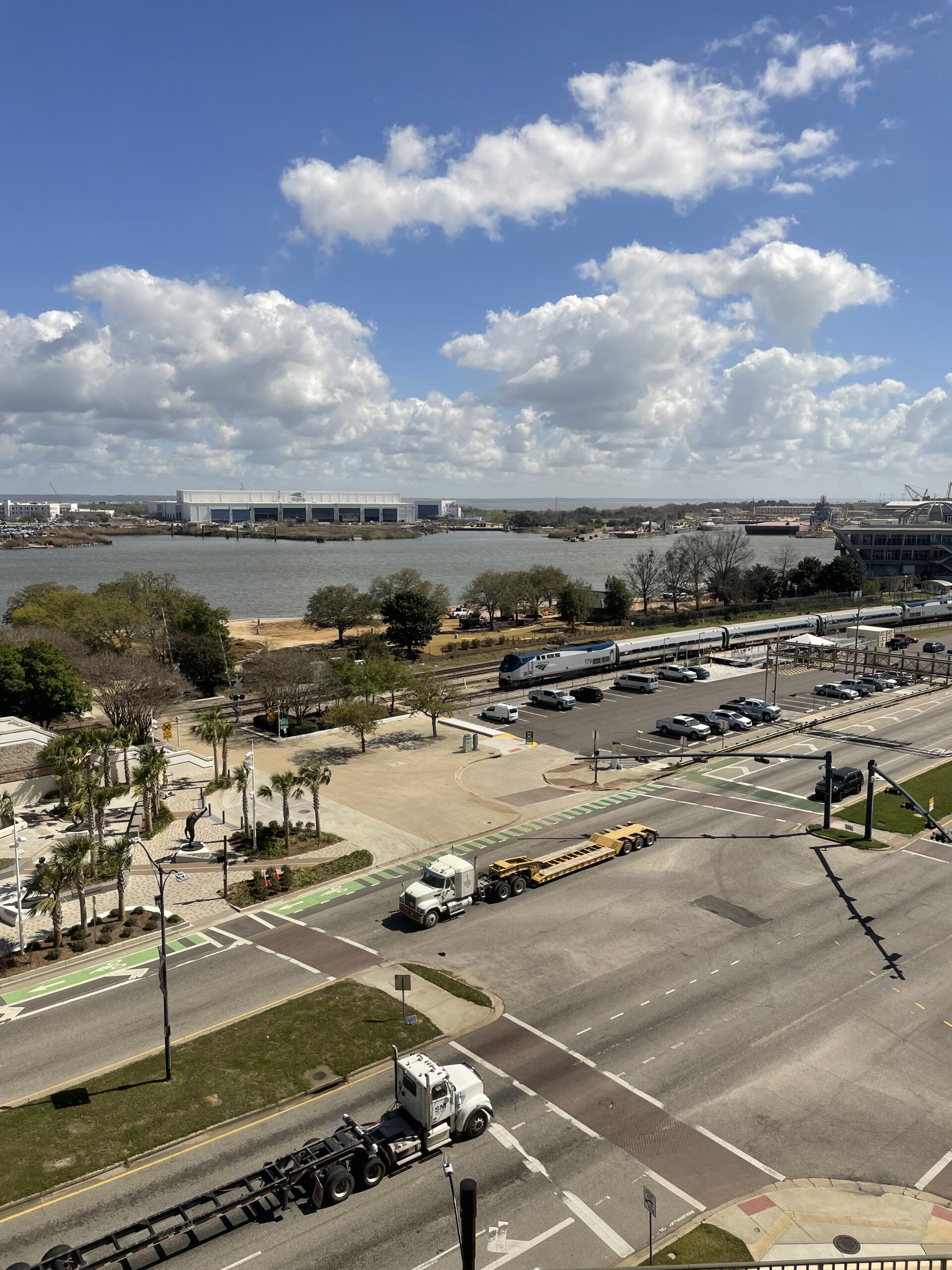
With its major deepwater port along the Mobile River, recently restored Amtrak service, and rapidly growing aerospace manufacturing industry, Mobile was a fitting place for the Transit Retreat. In addition to the engaging panel sessions, workshops, one-on-one conversations, and networking events, Retreat attendees were invited to explore downtown Mobile in golf carts through MOB City Rides, a Local Use Vehicle (LUV) shared mobility option well-suited to replace short car trips.
[MOB City Rides image]
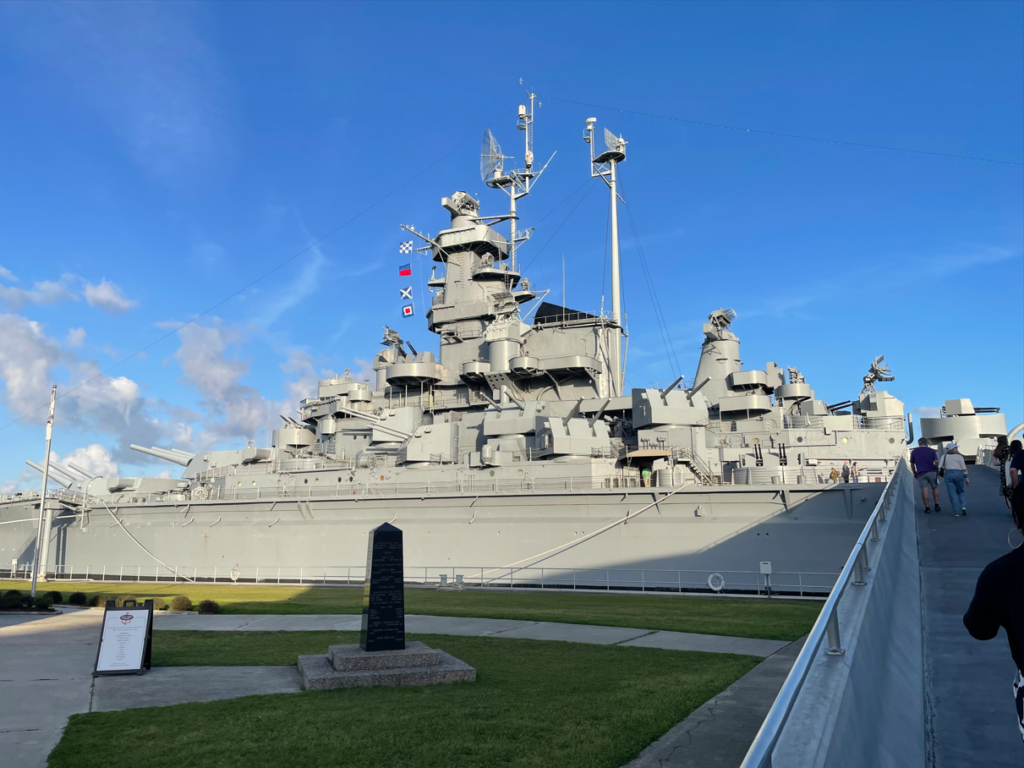
Attendees also had the opportunity to ride The Wave, Mobile’s public transit system, to the USS Alabama Battleship Memorial Park to tour the battleship, the USS Drum submarine, and other WWII vehicles.
Conclusion
Knowledge sharing is essential in making transportation systems safer, more dynamic, and more accessible. The Transit Retreat provided a focused, intimate forum for practitioners to network, share experiences, and learn from each other. This setting allowed for rural transit providers, including many IMI and AIM awardees, from across different states to convene to share common challenges, discuss practical solutions, and build connections with peers.
At the end of the event, organizers announced that the next edition of the Transit Retreat will be hosted in Charleston, WV, May 19-20, 2027.